Bringing Handcrafted Charm to Life with Floral Teardrop Earring Designs
There's a quiet kind of magic in taking a single illustration and watching it become something entirely new. A set of earrings floral and teardrop earrings clipart files sits on your desktop, waiting to be opened, resized, layered, or sent to a cutting machine. What makes these 12 individual files especially useful isn't just the shapes themselves—it's how easily they move between different creative tools, different materials, and different finished products.
The collection comes packed as a single zip archive you'll need to extract before diving in. Inside, you'll find the same designs repeated across five formats: SVG, DXF, EPS, AI, and PNG. That redundancy isn't wasteful. It's deliberate. Each format speaks a different creative language, and having all of them means you won't waste time converting or compromising on quality when your project shifts from screen to print to physical material.
What These Floral and Teardrop Earring Graphics Actually Are
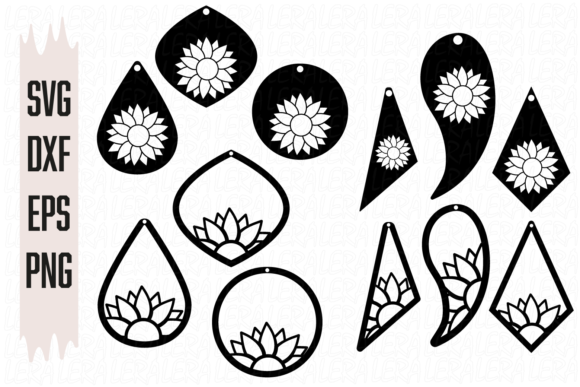
At their core, these are clean, thoughtfully composed line illustrations that blend floral motifs with the classic teardrop earring silhouette. Petals curve outward from dangling shapes. Leaves wrap around elongated drops. Some designs lean more botanical, with layered blossoms forming the earring body, while others keep the flowers as accents framing the teardrop. The balance between organic floral curves and structured jewelry shapes gives them a versatility that works across wildly different projects.
You're not downloading a finished pair of earrings to wear. What you get is the blueprint—the digital artwork that can become a physical object, a printed embellishment, a website accent, or part of a larger composition. The 12 individual files in the set give you variations on the theme so you aren't locked into one look. You can mix, match, and adapt depending on whether you're designing something romantic, rustic, modern, or playful.
Handmade Jewelry That Starts on Your Screen
If you own a cutting machine—a Cricut, Silhouette, Brother ScanNCut, or similar—you already know the thrill of sending a design to cut and peeling away the excess material. The SVG and DXF files in this bundle are built for exactly that workflow. Load one into your cutting software, scale it to the size you want, and let the machine handle the precision work on acrylic, leather, wood veneer, or heat-transfer vinyl. A small business owner making lightweight earrings for craft fairs can take a teardrop floral design, cut it from painted birch plywood, add a jump ring and hook, and have a finished product that looks intentionally designed rather than mass-produced.
The multiple design variations matter here. When you're selling at a market or online, offering three or four earring styles instead of one gives customers a reason to buy more than a single pair. One design might feature an open teardrop with a tiny flower suspended inside. Another could reverse the concept, with the flowers forming the perimeter. You're not reinventing the wheel each time—you're working from a cohesive visual language that feels curated.
Wedding Stationery and Party Invitations with a Personal Touch
Couples planning a wedding often hunt for floral details that feel specific to their vision rather than generic stock imagery. A teardrop earrings motif, scaled down and used as a divider element or corner accent on an invitation suite, reads as a jewelry-inspired botanical line drawing. It hints at elegance without screaming "clip art." The PNG files, with their transparent backgrounds, drop directly into Canva, Adobe Express, or more advanced layout software without fuss.
Beyond weddings, the same graphics work for bridal shower invites, engagement party announcements, or save-the-date cards. The floral element softens the visual tone, while the earring shape gives it structure. Someone arranging a garden party or a birthday dinner with a botanical theme can use these as border elements, envelope liners, or menu accents. Because you receive 12 distinct files, you can spread them across a full stationery suite—invitation, RSVP card, details card—without the repetition feeling obvious.
Digital Content That Stands Out
Bloggers, social media managers, and newsletter creators often need small graphic touches that elevate otherwise text-heavy layouts. A delicate floral teardrop earring illustration tucked beside a blog post title or used as a section divider adds an editorial quality without distracting from the content. The PNG format works everywhere: WordPress media libraries, email templates, Instagram Stories, Pinterest pins. The transparency ensures the illustration floats cleanly over whatever background color or pattern you're using.
For someone running a lifestyle blog or a beauty-focused Instagram account, these designs connect visually to fashion and personal style without being literal photographs. They suggest refinement and attention to detail. Used consistently across posts, they become part of a recognizable visual signature that followers come to associate with your content.
Digital Scrapbooking and Memory Keeping
Scrapbookers—whether working in Photoshop, Procreate, or a dedicated digital scrapbooking app—are always looking for embellishments that don't feel mass-market. The hand-drawn quality of these earrings floral designs lends itself beautifully to layouts about special occasions, girls' nights, bridal showers, or any memory tied to dressing up and celebrating. Layering a teardrop earring graphic over a photo of a jewelry display at a market, or tucking it beside a journaling block, creates a connection between the visual and the story.
Print-based scrapbookers aren't left out either. Print the PNGs at high resolution onto cardstock, fussy-cut the shapes, and you have custom die-cut embellishments for physical albums. The designs are intricate enough to look deliberate but simple enough that cutting by hand doesn't become a tedious chore.
Small Business Branding and Product Packaging
Entrepreneurs selling jewelry, accessories, or beauty products often need cohesive branding elements they can implement themselves. A floral teardrop earring icon can anchor a logo concept, appear on thank-you cards tucked into orders, or decorate the header of a printable price list. The EPS and AI files open in Adobe Illustrator, Affinity Designer, or Inkscape, which means you can recolor the linework, adjust stroke thickness, or pull apart individual elements to use separately.
Consider a small soap maker whose branding leans botanical and feminine. A scaled-down teardrop earring motif, used sparingly on product labels or stamped onto tissue paper, feels like an extension of the natural, handcrafted story the brand tells. It's an inexpensive way to add a custom-designed touch without hiring an illustrator for every small element.
What to Know Before You Start Cutting or Designing
The zip file you download is straightforward, but a few practical considerations will save you time. Before you double-click to extract, make sure your computer can handle the contained formats. Most modern machines can open ZIP archives natively. On Windows, right-click and select "Extract All." On a Mac, double-clicking typically expands the folder automatically. Once extracted, you'll see the 12 individual designs, each available in all five formats.
For cutting machine users, the most important step happens before you hit "cut." Confirm that your specific machine and software support the file type you're trying to import. Cricut Design Space generally prefers SVG files for upload. Silhouette Studio works with DXF and SVG depending on your edition of the software. Some older machines or basic software tiers may require you to trace a PNG rather than importing a vector directly. Test one file first. Scale it, preview the cut lines, and check for any odd path issues before committing a whole sheet of material.
Material choice dramatically affects how these earring designs translate into physical objects. A thin, delicate line that looks beautiful on screen might become too fragile to cut from cardstock at a small scale. Acrylic and thin wood handle intricate cuts better but need appropriate blade settings and possibly a strong grip mat. Test cuts on scrap material aren't wasted effort—they're insurance against ruining a sheet of specialty acrylic you paid real money for.
Color and finish matter too. A floral teardrop earring design cut from matte white cardstock reads completely differently than the same shape cut from glossy gold adhesive vinyl. Think about what surface these will land on. A gold vinyl earring graphic applied to dark navy gift boxes creates an elevated, boutique feel. The same shape printed in black ink on kraft paper looks rustic and understated.
Where These Files Fit Into Different Workflows
Graphic designers and illustrators sometimes need placeholder or complementary elements while building larger compositions. These files, especially in EPS and AI format, slot into Adobe Creative Cloud workflows without conversion. You can pull a single floral teardrop outline into a fashion illustration, a mood board, or a product mockup. The vector nature means infinite scalability—enlarge it for a poster or shrink it for a business card without losing crisp edges.
For instructors and workshop leaders teaching design or crafting classes, a bundle like this provides ready-made project material. You can hand students the same files and let them experiment with different materials and color palettes. One person might engrave the design onto a leather keychain using a laser cutter. Another might use it as a screen-printing stencil for fabric patches. The learning happens through application, and a versatile design supports that exploration.
Marketers running seasonal campaigns can pull these graphics into fall wedding promotions, spring bridal content, or summer festival-themed editorial. Because the floral element feels tied to growth and blooming, the designs naturally suit spring and summer but don't exclude autumn or winter when paired with warmer, darker color schemes. That seasonal flexibility means you aren't buying clipart you can only use for a three-week window.
Making the Most of 12 Variations
Twelve files might sound like a lot at first glance, but their value compounds when you think across projects. A single design can become an earring to sell, a sticker for packaging, a web graphic for an announcement bar, and a scrapbook embellishment—all from one download. The multiple variations let you rotate looks so your audience or customers don't see the same exact graphic repeated until it becomes wallpaper.
If you're building a product line, consider how the designs work as a family. Group three or four similar motifs together as a cohesive jewelry collection. Use others as gift-with-purchase stickers. Reserve a few of the simpler, bolder designs for large-format items like tote bags or t-shirt decals where intricate detail might get lost or feel too busy.
The fact that you also get PNG files alongside the vectors matters more than it seems. PNGs let you preview designs quickly without opening specialized software. Drag a PNG into a document or email to show a collaborator. Use them in web-based tools that don't accept SVG imports. They function as the universal preview format that bridges the gap between vector and the final visual.
Who Finds These Designs Useful—and Why
A craft blogger creating DIY earring tutorials can screenshot the design process using these files without worrying about copyright infringement on stock imagery. The files are meant to be used. A print shop owner can keep them on file for customers who walk in needing last-minute custom invitations and don't have their own artwork ready. A teacher can incorporate them into a lesson about symmetry, design principles, or entrepreneurship. A freelance social media manager can build a content calendar around fashion and accessory-themed posts with consistent visual elements.
The common thread among these users is that they value turnkey assets that don't require hours of cleanup or conversion. The multiple format options mean the files work regardless of the software someone prefers or can afford. Someone using free tools like Inkscape and GIMP can achieve the same output quality as someone on a full Adobe subscription. That accessibility broadens who can realistically use these designs for real, income-generating, or personally meaningful projects.
When someone asks about receiving the files in another format or has questions about compatibility, that conversation signals the kind of practical, hands-on use these designs were intended for. The designs aren't locked behind layers of licensing confusion or restricted to a single use case. They're starting points for finished goods, branded materials, thoughtful gifts, and content that connects with real audiences.