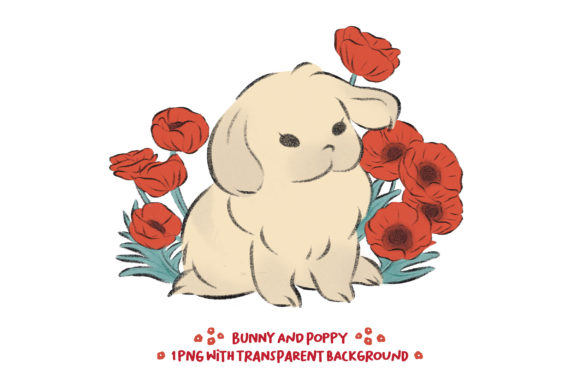
Easter Bunny in Spring Floral Clipart: A Strategic Asset for Seasonal Branding and Creative Projects
Every spring, creators and businesses face the same challenge: how to capture the freshness of the season without falling into visual clichés. The Easter Bunny in Spring Floral Clipart offers a versatile starting point—but only if you approach it with intentionality. This isn't about grabbing a cute image and pasting it onto whatever you're making. It's about understanding what a well-composed botanical illustration with a seasonal character can do for your communication, your brand presence, and your audience's emotional response.
When you look at a thoughtfully designed rabbit nestled among spring blossoms—rendered at 3000 by 3000 pixels with a transparent background—you're holding more than a decorative element. You're holding a signal. Spring imagery, particularly when it combines fauna and flora, tends to perform well in engagement metrics across social platforms, email headers, and print materials. The psychological pull is measurable: people associate these visuals with renewal, warmth, and approachability. For businesses and creators, that association can be leveraged with precision.
Why Visual Assets Like This Clipart Matter for Strategic Communication
Most people underestimate the role of a single image in their workflow. They treat clipart as filler—something to break up text or fill empty space on a layout. That's a missed opportunity. The Easter Bunny in Spring Floral Clipart, when used deliberately, becomes a functional piece of your visual hierarchy. It directs attention, sets tone, and creates subconscious alignment between your message and your audience's seasonal mindset.
Consider the entrepreneur who runs a boutique bakery. In March and April, her email open rates typically dip unless she adjusts her visual language. By incorporating seasonal imagery that feels crafted rather than stock, she signals relevance. The rabbit in a field of flowers doesn't just decorate her newsletter; it reinforces that she understands the rhythm of her customers' lives. That small adjustment can lift engagement by reinforcing topicality without overt sales pressure.
Positioning Your Brand Through Seasonal Visual Choices
Branding isn't static. The most effective brands maintain consistency while flexing with cultural and seasonal moments. The trick lies in choosing moments that align with your audience's emotional state. Spring represents renewal, growth, and gentle optimism. The Easter rabbit, when paired with botanical elements, softens commercial messaging and makes your communication feel more human.
What makes this particular clipart useful from a positioning standpoint is its resolution and format. At 300 DPI and 3000 by 3000 pixels, it holds up across digital and print applications. The transparent PNG background means you're not locked into a white box that clashes with colored layouts. You can layer it over pastel backgrounds, integrate it into product photography, or use it as a subtle watermark on stationery. That flexibility matters when you're building a consistent seasonal campaign across multiple touchpoints—social media, packaging, digital ads, and in-store signage.
Practical Use Cases Across Different Roles and Industries
Different professionals will find different applications for this type of asset. A publisher designing a children's book cover might use the rabbit as a central character, placing text around the floral elements to create a cohesive composition. A freelancer creating invitations for a spring event can use the transparent background to layer the image over custom textures or gradients without the headache of manual background removal.
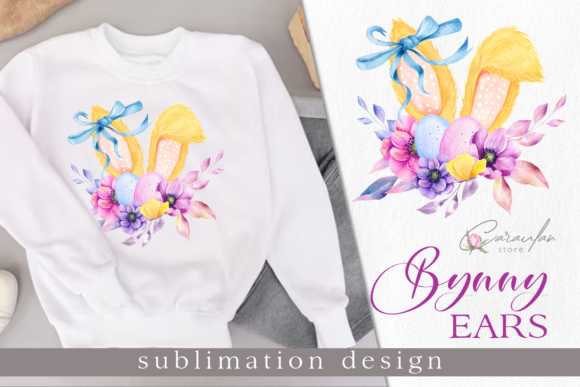
Small business owners in the gift and home décor space often turn to high-resolution clipart for sublimation projects. The file's compatibility with sublimation printing opens up product categories like mugs, tote bags, pillow covers, and apparel. The Easter Bunny in Spring Floral Clipart, because of its square format and crisp edges, transfers cleanly onto physical surfaces. The floral elements provide visual complexity that makes the final product look hand-illustrated rather than mass-produced—a distinction that customers notice and are often willing to pay more for.
Educators and content creators can use the image to build spring-themed worksheets, presentation slides, or video thumbnails. The familiarity of the bunny motif creates a welcoming entry point for younger audiences, while the botanical detail keeps it visually interesting for adults. There's a subtle sophistication in the composition that prevents it from feeling juvenile, which broadens its applicability considerably.
Planning Your Creative Projects Around Intentional Asset Selection
One of the most common mistakes people make with clipart is acquiring it without a plan. They download files impulsively, store them in disorganized folders, and forget they exist until the moment has passed. A better approach is to map your seasonal content calendar first, then acquire assets that serve specific slots in that calendar.
If you know you'll need spring-themed visuals for an April product launch, a March social media campaign, and Easter weekend email marketing, you can plan how the Easter Bunny in Spring Floral Clipart fits into each context. Maybe it becomes the hero image for one campaign and a supporting decorative element for another. Maybe you recolor or crop it differently for each platform. Planning this ahead of time prevents the reactive scramble that leads to mediocre visual choices.
Another planning consideration is file management. When you receive the design in a zip file and extract it using WinZip or WinRAR, take the extra minute to rename the file descriptively and save it in a folder structure that makes sense for your workflow. Tag it with terms like "spring," "Easter," "floral," and "bunny" so it's searchable later. Small organizational habits compound into significant time savings over months and years of content creation.
Understanding Resolution, Format, and Output Quality
Not all digital assets are created equal. The specifications of this clipart—3000 by 3000 pixels at 300 DPI—place it in a professional-grade category. Many free or low-cost alternatives come in at 72 DPI with smaller dimensions, which limits them to screen-only applications. If you try to print a 72 DPI image at any reasonable size, the result will be pixelated and unprofessional.
The transparent PNG format is equally important. JPEG files flatten everything onto a white or colored background that you can't easily remove. With a transparent PNG, you maintain full control over how the image integrates with your design. You can place it over photographs, colored blocks, gradients, or patterns without a visible bounding box. This single feature dramatically expands the range of professional-looking outputs you can create from one asset.
For anyone working with sublimation printing, the DPI and resolution become even more critical. Sublimation requires crisp, high-contrast source files to produce vibrant transfers. The 300 DPI specification meets the threshold that professional print shops and heat press manufacturers recommend. Using lower-resolution files for sublimation results in muddy transfers that disappoint customers and waste materials.
Decision-Making Framework for Seasonal Visual Assets
Before you commit to using any seasonal clipart, including the Easter Bunny in Spring Floral Clipart, run through a few decision-making filters. First, ask whether the imagery aligns with your audience's expectations and your brand's visual identity. A law firm probably shouldn't plaster a bunny across its homepage, but a family-owned café absolutely could use it on a spring menu insert. Context determines appropriateness.
Second, consider the lifespan of the project. If you're creating something ephemeral—a one-time social post, a limited-run product, a seasonal email—the investment in a quality asset makes sense because it directly serves a short-term goal with measurable returns. If you're building permanent brand elements, you might need something more timeless or custom. Match the asset's nature to the project's duration.
Third, evaluate whether the file's technical specifications meet your output requirements. If you're only posting on Instagram, the 3000 by 3000 pixel dimensions give you ample room to crop and resize without quality loss. If you're printing at large scale, you have the resolution to do so confidently. Understanding your output medium before you design saves you from awkward conversations with printers or pixelated embarrassment on high-resolution screens.
Risks of Using Clipart Without Clear Goals or Context
Even the most beautiful clipart can undermine your efforts if deployed thoughtlessly. The biggest risk is incongruence—when seasonal imagery appears disconnected from the surrounding content or brand voice. A bunny in flowers pasted next to a serious announcement about policy changes creates cognitive dissonance that confuses audiences. People sense when visuals are added for decoration rather than communication.
Another risk is overuse or poor timing. Using Easter imagery too early feels commercially grasping. Using it too late looks out of touch. There's a relatively narrow window—typically from mid-March through the week after Easter—when this type of visual language resonates naturally. Outside that window, it can feel forced or irrelevant. Calendar awareness is part of the strategic discipline.
There's also the subtle risk of relying too heavily on pre-made assets for brand identity work. The Easter Bunny in Spring Floral Clipart is excellent as a seasonal accent or campaign-specific element. It is not a substitute for a cohesive brand identity system. Use it to complement your existing visuals, not to define them. The strongest brands have a clear core identity that seasonal touches enhance rather than replace.
Integrating Clipart Into a Larger Content Strategy
The most effective use of any single visual asset happens when it's part of a broader content architecture. If your spring campaign includes blog posts, email sequences, social content, and printed materials, the bunny-and-flower motif can serve as a unifying thread. Consistency across touchpoints builds recognition and trust. One asset, used thoughtfully across channels, creates more cumulative impact than ten unrelated images used once each.
This is where the versatility of a 3000 by 3000 pixel transparent PNG really pays off. You can scale it down for an email header, use it full-size on a product mockup, extract just the floral elements for a pattern, or silhouette the bunny for a simplified icon. The file contains enough visual information to support multiple use cases without degrading. That's not just convenience; it's strategic efficiency—getting more utility from fewer assets.
Long-Term Value of High-Quality Seasonal Assets
Digital assets with strong foundational qualities—high resolution, transparency, well-composed subject matter—retain their usefulness across multiple seasons. The Easter Bunny in Spring Floral Clipart isn't a single-use disposable. It can return year after year in fresh contexts. Maybe one year it anchors an Easter promotion; the next year it becomes part of a spring product line's packaging; the year after that, it appears in a seasonal lookbook. The initial investment compounds when the asset is versatile and technically robust.
This longevity mindset shifts how you evaluate creative resources. Instead of asking "What can I do with this right now?" you start asking "What might this enable over the next three to five spring seasons?" That longer time horizon justifies spending more time on thoughtful implementation and more care on file organization and preservation. Back up your extracted PNG properly. Store it redundantly. Treat it as the reusable resource it is.
Making the Most of Transparent Backgrounds and Dimensions
The technical features of this clipart deserve closer attention because they directly affect what you can create. The transparent background means you're not constrained to rectangular placements. You can position the bunny and flowers with precision, overlapping other design elements without harsh borders. This opens up layout possibilities that aren't available with flattened formats.
The square 3000 by 3000 pixel canvas gives you a balanced proportion that works well as a focal point in centered designs. You can also crop into the composition—maybe you want just the bunny's face for a profile picture, or just the lower floral section for a horizontal banner. Starting with plenty of resolution gives you cropping flexibility without sacrificing output quality. Many designers underestimate how much this matters until they try to extract a detail from a low-resolution source and end up with a blurry mess.
For those working with sublimation or print-on-demand products, the square format aligns well with common product templates. Mugs, coasters, throw pillows, and tote bags often use square or near-square print areas. A 3000 by 3000 pixel file drops into these templates with minimal adjustment, which saves time during the production setup phase. Efficiency at every step adds up when you're producing multiple products for a seasonal collection.
Thoughtful Implementation Over Random Decoration
There's a world of difference between decorating and communicating. Decoration adds visual noise. Communication adds meaning. When you use the Easter Bunny in Spring Floral Clipart, aim for the latter. Ask yourself what this image is saying in the context you're placing it. Is it welcoming your audience? Is it signaling seasonal relevance? Is it softening a sales message? Is it creating emotional warmth around a brand interaction? If you can't articulate the purpose, you might be decorating rather than communicating.
One practical exercise: before finalizing any design that includes this clipart, write one sentence explaining what the image contributes to the overall piece. If the sentence sounds vague or defensive, reconsider the placement. If it sounds clear and intentional, you're probably on the right track. This small habit improves creative decision-making across all types of visual work.
Seasonal imagery works best when it feels like a natural extension of your message, not an afterthought. The rabbit in spring flowers isn't the star of your communication—your message is. The image supports, enhances, and contextualizes that message. Keep that hierarchy clear, and your seasonal creative work will feel cohesive rather than cluttered.